
Trade & logistics
Marine Cargo Insurance for Commodity Shipments: ICC (A), (B) and (C) Explained
PTC Export Desk5 min read
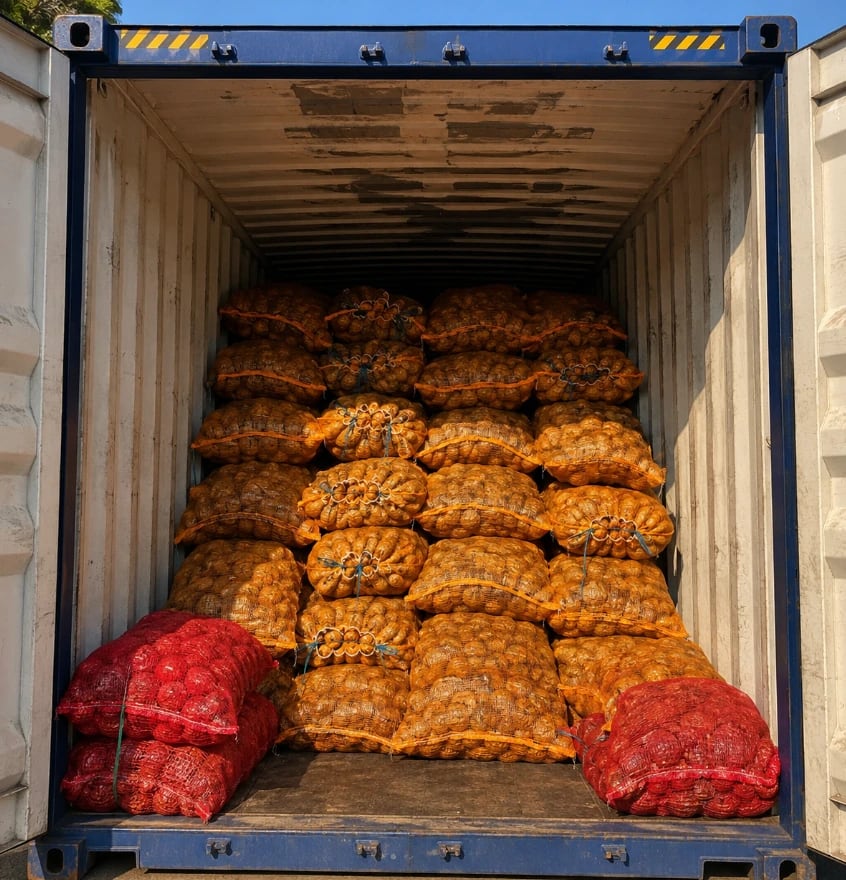
Cargo insurance ICC A, B & C
Who insures the cargo, against what, and for how much? A guide to the Institute Cargo Clauses and what Incoterms 2020 require under CIF and CIP.
Sea freight is reliable, but cargo can still be lost or damaged — by fire, a casualty at sea, water entering a container or a general average declaration. Marine cargo insurance covers that risk. The question in every contract is who buys the cover and how broad it is, and the answer depends largely on the Incoterm.
Who insures under each Incoterm
| Incoterm | Who arranges cargo insurance |
|---|---|
| EXW, FOB, CFR (CNF) | The buyer, if it wants cover; the seller has no obligation |
| CIF | The seller, at minimum Institute Cargo Clauses (C) |
| CIP | The seller, at Institute Cargo Clauses (A) unless agreed otherwise |
Under Incoterms 2020 the minimum insured amount for CIF and CIP is the contract price plus 10% — that is, 110% of the value — in the currency of the contract. Buyer and seller can agree a higher level of cover, and many commodity buyers ask for ICC (A) even when buying CIF.
ICC (A), (B) and (C) in plain language
| Clauses | Scope of cover |
|---|---|
| ICC (A) | All risks of loss or damage, subject to the listed exclusions |
| ICC (B) | Named perils: those in (C) plus, among others, earthquake, washing overboard and entry of sea or river water into the vessel or container |
| ICC (C) | Major casualties only: fire or explosion, vessel stranded, sunk or capsized, collision, jettison and general average sacrifice |
Exclusions that matter for agricultural cargo
- Inherent vice — deterioration caused by the nature of the goods, such as mould from excess moisture at loading
- Insufficient packing
- Ordinary leakage, ordinary loss in weight or volume, and ordinary wear and tear
- Delay, even if caused by an insured risk
Insurance therefore does not replace good preparation. Correct moisture levels, sound packaging and proper container conditions remain the seller's best protection for copra, cocoa beans and fresh coconuts.
General average
If a ship's master sacrifices cargo or incurs extraordinary costs to save the voyage, the loss is shared by all cargo owners under general average. Cargo without insurance can be held until the owner provides security. This is one of the strongest reasons to insure even low-value bulk commodities.
Frequently asked questions
What insurance does the seller provide under CIF?
Under Incoterms 2020 the seller must provide at least Institute Cargo Clauses (C) cover for 110% of the contract price, unless the parties agree on higher cover.
What is the difference between ICC (A) and ICC (C)?
ICC (A) covers all risks of loss or damage except listed exclusions. ICC (C) covers only major casualties such as fire, sinking, stranding, collision and general average.
Does cargo insurance cover mould in cocoa or copra?
Usually not when the mould results from the goods' own condition, such as excess moisture at loading. That is excluded as inherent vice, so moisture control before shipment is essential.
Have a question about this topic?
Our team will answer with specifications, availability and terms for your market.