
Product insight
Buying Copra from Indonesia: Grades, Quality Parameters and Shipping for Oil Mills
PTC Export Desk5 min read
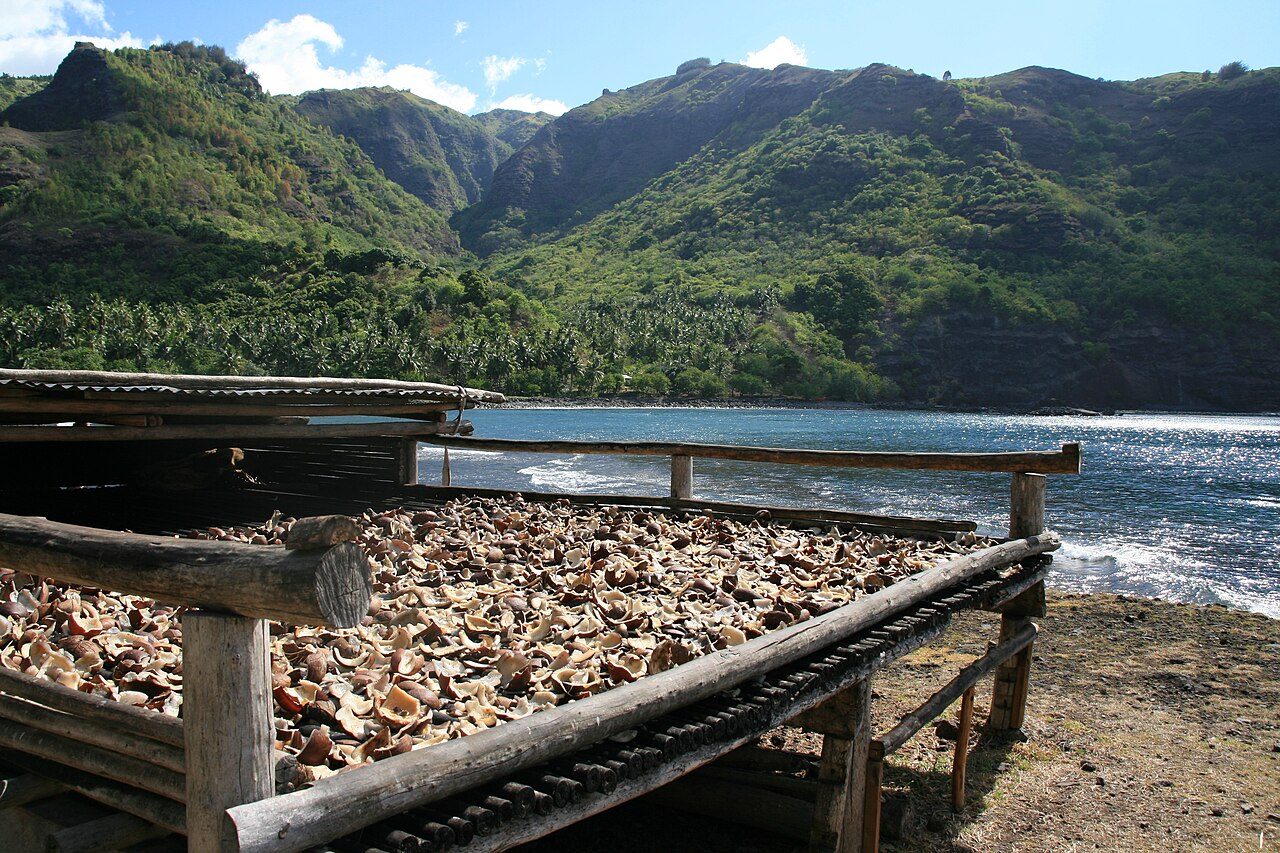
Indonesian copra for oil mills
Photo: Sémhur · CC BY-SA 3.0
What oil mills should know before buying Indonesian copra: Edible, Regular and Cracked grades, moisture and FFA, bulk container loading and contract terms.
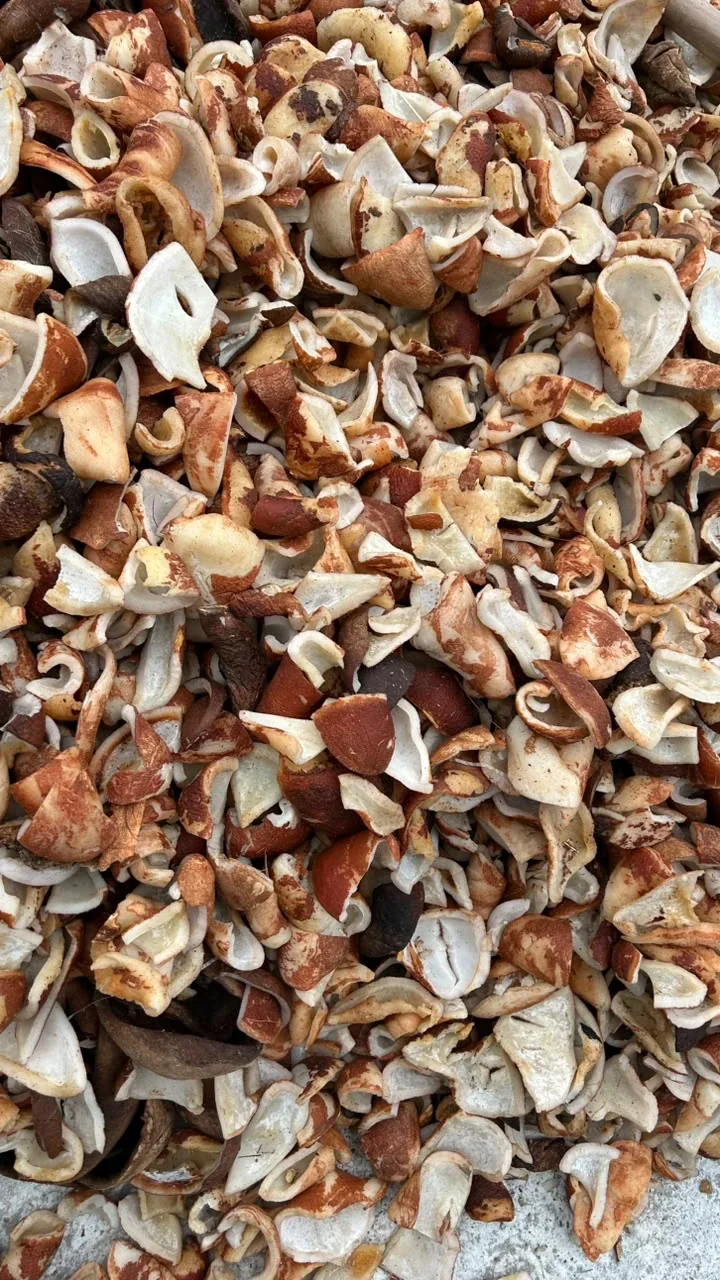
Copra — the dried kernel, or meat, of the coconut — is the raw material for crude coconut oil and for copra meal used in animal feed. Indonesia is one of the world's major copra producers, and most of it is made by smallholders who split mature coconuts and dry the meat in the sun, in smoke kilns or in hot-air dryers. In customs terms, copra falls under HS heading 1203.
How copra is made — and why drying matters
Fresh coconut meat holds roughly half its weight in water. To be stored and shipped safely it is dried to a single-digit moisture level. How that drying is done shows up in the final oil: clean, evenly dried copra is lighter in colour and keeps well, while under-dried or smoke-contaminated copra can develop mould, higher free fatty acid and dark colours that raise refining losses.
The three copra grades we offer
- Grade A — Edible: selected copra for edible-grade and food-related applications
- Grade B — Regular: standard commercial copra for coconut oil milling and general processing
- Grade C — Cracked: an economical grade with cracked pieces for industrial crushing and oil extraction
Quality parameters to fix in the contract
| Parameter | Why it matters |
|---|---|
| Moisture content | Drives storage stability, mould risk and the weight you pay for |
| Oil content | Determines your oil yield per tonne |
| Free fatty acid (FFA) | Indicates oil quality and refining loss |
| Foreign matter and defects | Shell, fibre, mouldy, burnt or immature pieces reduce yield |
| Aflatoxin | Specified where the destination market or food use requires it |
Requirements differ by mill and by market, so PTC agrees moisture, oil content, FFA and defect limits with each buyer rather than quoting a single fixed specification. State the sampling and test method too — results can differ noticeably between methods.
Packing, loading and origin
Copra is normally loaded in bulk in 20 ft or 40 ft containers. Containers should be clean, dry and odour-free, and copra should be loaded as soon as possible after drying to limit moisture pick-up. PTC sources copra from Parigi Moutong in Central Sulawesi and from East Java, with loading at Pantoloan (Palu) or Tanjung Perak (Surabaya).
What moves copra prices
- International coconut oil and lauric oil prices
- Seasonal harvest patterns and rainfall in producing regions
- Grade and agreed quality parameters
- Freight rates and container availability
- Exchange rates between the rupiah and the US dollar
How to request a copra quotation
Send us the grade, quantity, destination port and preferred Incoterm, plus any limits you need on moisture, oil content, FFA or aflatoxin. Our minimum order is one 20 ft container, and we will confirm availability and the loading port for your lot.
Frequently asked questions
What is the HS code for copra?
Copra is classified under HS heading 1203. The full national tariff code is confirmed on the export documents.
What is the difference between edible and regular copra?
Edible (Grade A) copra is selected for edible-grade and food-related uses, while Regular (Grade B) is standard commercial copra for coconut oil milling.
How is copra shipped from Indonesia?
Usually in bulk in 20 ft or 40 ft containers. PTC loads from Pantoloan, Palu or Tanjung Perak, Surabaya.
Related products
Have a question about this topic?
Our team will answer with specifications, availability and terms for your market.